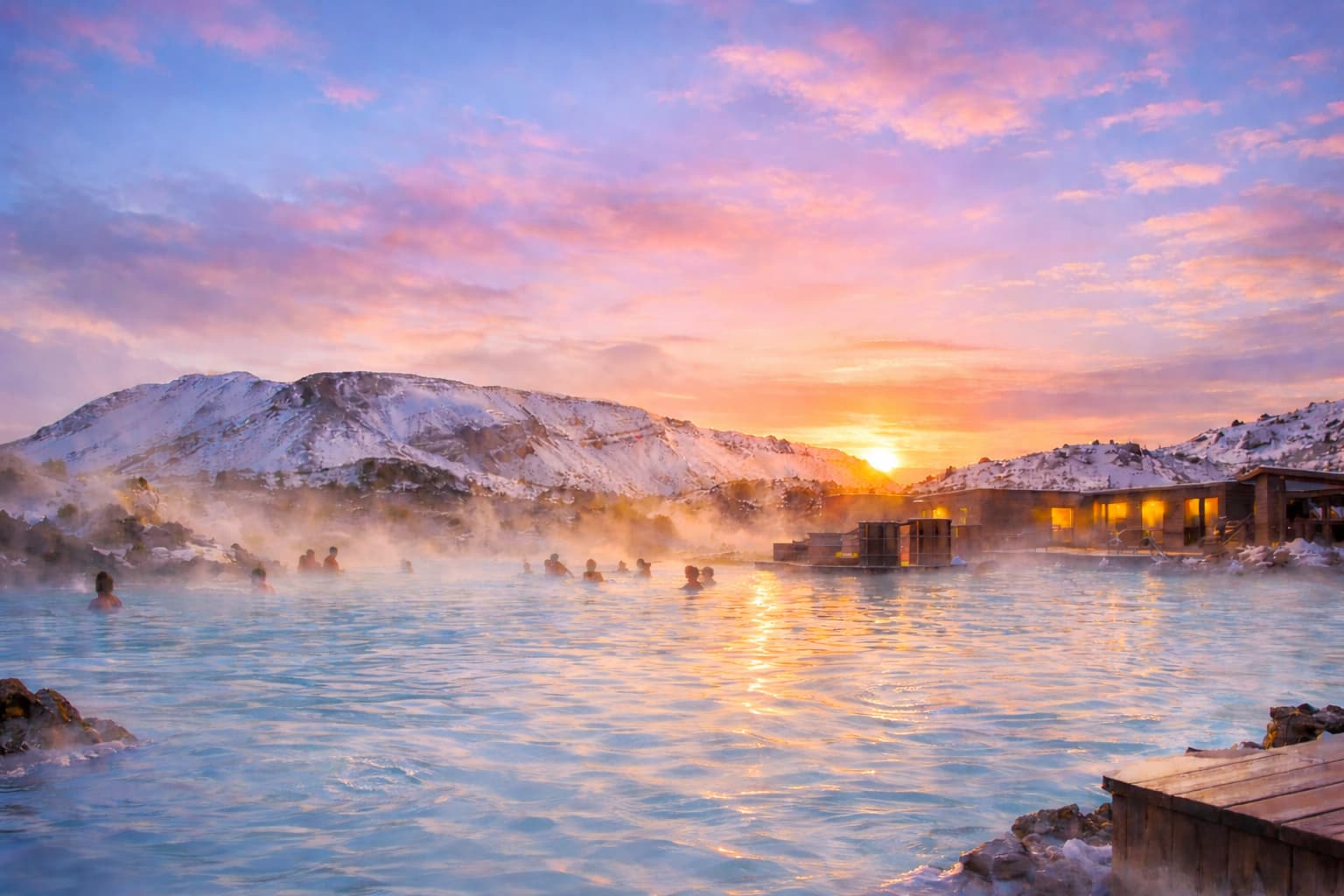
It’s freezing, and the air is crisp, touching your cheeks. You are walking in the middle of a vast volcanic landscape that appears so much like the moon, with more snow. But there is no cold. Not even a little bit. That is because you are swimming in milky-blue water that feels like a warm hug, steam rising around you and floating into the dark Icelandic sky.
It’s the Blue Lagoon in winter.
This place and timing are weird yet wonderful. To be honest, the season is perfect for a Blue Lagoon trip. Most people plan during the summer sun, but the real magic happens when the land shivers in snow. This is an Iceland travel package that sticks with you forever.
Why Go in Winter?
You might think, “Why Iceland in December?” Good question. The reasons are:
- The Northern Lights: In summer, it never gets dark. In winter, you have a good chance to sip a drink in the lagoon while watching green lights dance overhead. Something this magical is not every night routine, but when it happens, the view beats any beach sunset.
- Less Crowd: While summer is packed, winter gives you ample space to stretch. So, no worries about bumping into elbows while you float.
- Cozy Experience: There is something undeniably cozy about being warm when the world is shivering. The daylight stays short (10 AM to 5 PM). Close to dusk, the northern sky creates a twilight vibe that looks like something straight out of a fairytale.
Step-by-Step Blue Lagoon Experience
So, here is how your day chart on this Iceland tour package.
- Getting There: The destination is close to the airport. Like, 20 minutes close. It’s usually the first stop after the plane lands or the last one before takeoff. As you pass through moss-covered lava fields, the landscape provides a barren and beautiful sightseeing experience. If you are coming from Reykjavík, it’s about a 45-minute drive. Easy.
- The Arrival: You check in. You get a bracelet. This is your wallet and your locker key. Don’t lose it. You head to the changing rooms.
- The “Transition”: This is the part everyone worries about. “Do I have to run outside in a bikini in freezing temps?” No. There is an indoor entry point. You slip into the warm water inside, push through a little door, and voila—you are outside, submerged up to your neck in 38°C (100°F) geothermal seawater. Your head is in winter; your body is in the Caribbean.
- The Water: It’s not just hot water. It’s rich in silica and minerals. It’s astonishingly opaque. You can’t see your feet. The bottom is soft and natural. You float. You wander. You find a quiet spot.
Things to Do While You Soak
You don’t just sit there. Well, you can. But there is more.
- The Mask Bar: Swim up to the little hut in the water. They give you a white silica mud mask. Slap it on your face. You will look like a ghost. Everyone does. Leave it for 10 minutes. Wash it off. Your skin will feel ridiculous. Smooth. New.
- The In-Water Bar: Thirsty? You don’t get out. You wade over to the bar. Get a smoothie. Or a beer. Or wine. Whatever works.
- The Steam Cave: If the lagoon isn’t hot enough, find the steam caves. They are intense.
Nearby Adventures
Since you are already on the Reykjanes Peninsula, don’t just swim and leave. This area is a geological goldmine.
- Bridge Between Continents: A small footbridge where you can literally walk from the North American tectonic plate to the Eurasian one. It’s a 20-minute drive. It’s cool to say you walked between continents before lunch.
- Seltún: Bubbling mud pools. Steam vents. The earth smells like sulfur (rotten eggs), but the colors are incredible—reds, yellows, greens. It feels very alive.
- Gunnuhver: The biggest mud pool in Iceland. It’s loud. It’s vigorous. It’s named after a ghost.
Practical Tips
- Hair Care: This is the most important tip. The silica in the water is great for skin but terrible for hair. It won’t damage it permanently, but it will make it stiff and unmanageable for days. Conditioner is your best friend. Put a ton of it in your hair before you enter the water and leave it in. Or just don’t dip your hair.
- Hydrate: You are sweating more than you realize. Drink water.
- Booking: You cannot just show up. You must book in advance. Winter slots fill up, though not as fast as summer.
- Daylight: Remember, it gets dark early. Plan your sightseeing for the middle of the day and end at the Lagoon, or start at the Lagoon in the dark morning and watch the sunrise (if you can call it that; it’s more of a long dawn).
Sample Itinerary: The “Fire & Ice” Day
- 09:00 AM: Pickup from Reykjavík.
- 10:00 AM: Stop at Kleifarvatn Lake. It’s eerie and silent. Black sand beaches.
- 11:00 AM: Visit Seltún. Watch the earth boil.
- 12:30 PM: Lunch. Grab some soup or fish.
- 02:00 PM: Arrive at Blue Lagoon. Check-in.
- 02:30 PM: The Soak. Face mask. Drink. Relax. Watch the sky turn indigo.
- 05:30 PM: Dinner at Lava Restaurant (built into a lava cliff, obviously). The lamb is famous.
- 07:30 PM: Head back. Keep eyes peeled for Northern Lights on the bus ride home.
Final Thoughts
Winter in Iceland is harsh. It’s windy. It’s dark. But that is exactly why the Blue Lagoon works so well. It is a sanctuary. A bright, warm, milky-blue refuge in the middle of a frozen world.
It’s not just a spa day. It’s a story you’ll tell for years. The time you swam in the snow.
Pack your swimsuit. We’ll handle the rest.