One True Enemy
Two centuries ago, ‘Dark of Night’ had only one true enemy, ‘Red Fire.” The devil came every dawn to haunt humans with whispers and nightmares. The horror faded away from the mind when the flames burned in the eyes.
“Not a Night That is Too Bright”
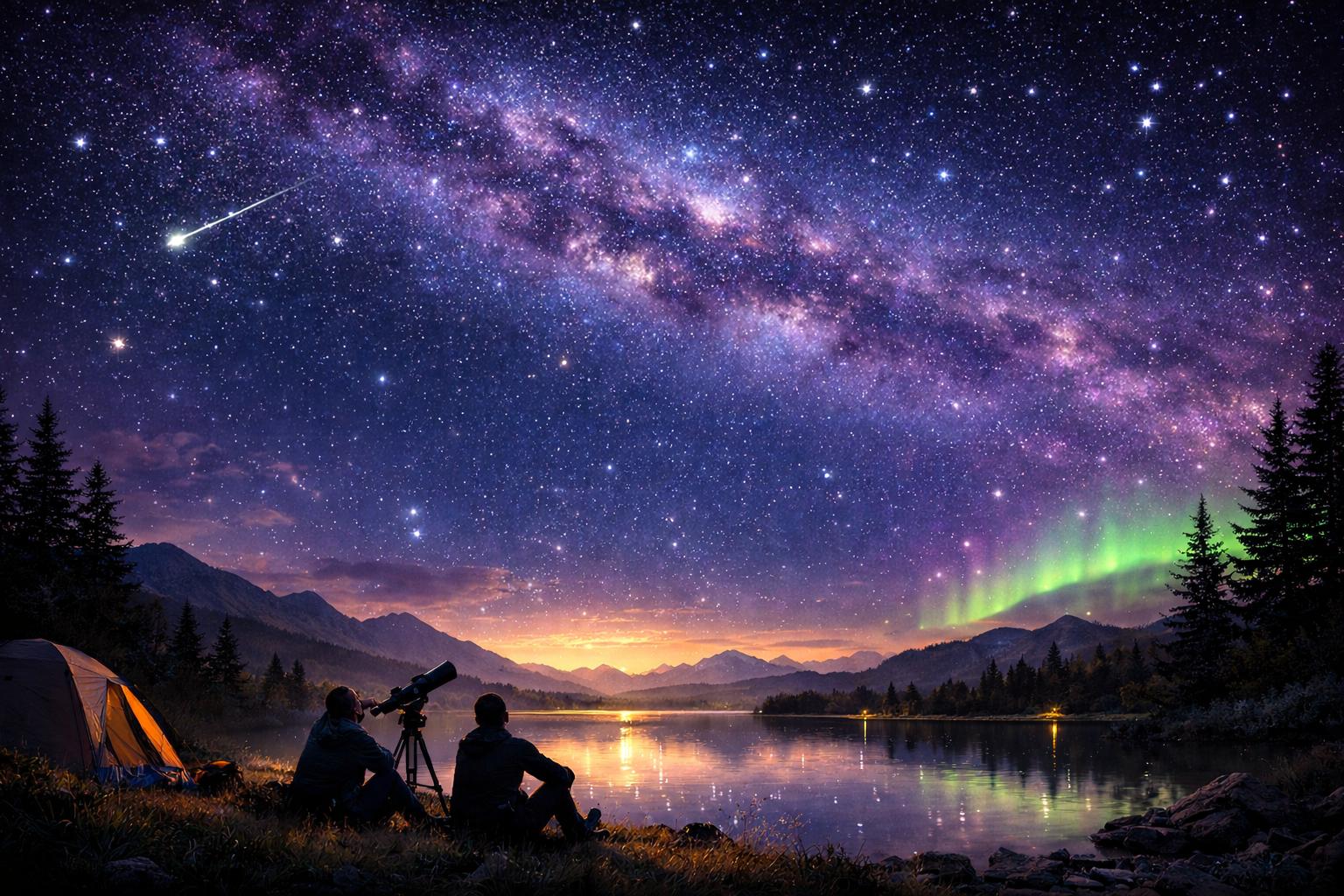
Most of us will never see true darkness. Now, we walk under a soup of orange streetlights and sit against glowing screens with a constant background hum. But there is a place where the world switches off, and the cosmos switches on.
In February 2026, the UK travel package has something special to offer. The national parks are teaming up again for the Dark Skies Festival. People stand in a field looking up. In those quiet moments, you realize that darkness can be a canvas rather than scary.
If you have been feeling tired of the digital grind, this might be the escape button you need to press. From February 13th to March 1st, 2026, the lights go down, and the show begins.
Why 2026 is the Year to Go
Every year, these festivals get a little more creative, but 2026 has specific places to visit in UK that make it worth the trip.
- South Downs turns 10: The South Downs National Park is celebrating its 10th anniversary as an International Dark Sky Reserve. That is a decade of protecting the night. They are pulling out all the stops between February 12th and 22nd, including special “bio-fluorescent” walks (more on that later).
- New Gear in the North: The North York Moors has just opened the Danby Lodge Dark Skies Station. It’s a dedicated observatory. No more shivering in a car park, hoping your binoculars work. They have “Astro Dog” stargazing sessions with high-tech equipment that can show you distant nebulae you’d never see with the naked eye.
- Total Immersion: The trend for 2026 is “noctourism.” Hotels and B&Bs are offering “stay and gaze” packages where you get hot chocolate, blankets, and telescopes right on your patio.
Where to Find the Magic (And When)
You can’t just drive anywhere and expect to see the Milky Way. You need to head to the protected zones. Here is where the action is this February.
1. Yorkshire Dales & North York Moors (Feb 13 – Mar 1)
These two natural parks in UK are neighbors, and they coordinate their events. They are arguably the heavyweights of the festival. The skies here are so dark you can see up to 2,000 stars at once.
What to do: Try the Planet Trail at Aysgarth Falls. It’s a walk through the woods where you pass models of the planets. Great for kids, but honestly, walking through a dark forest at night is fun for anyone.
The Vibe: Rugged, expansive, and very, very quiet.
2. Northumberland (Feb 13 – Feb 21)
This is for the hardcore stargazers. Northumberland has the largest area of protected night sky in Europe. If you want to feel tiny beneath the cosmos, go here.
Highlight: The Kielder Observatory is running a “Secret Lives of Stars” event on February 16th. They explain how stars are born and how they die. It’s heavy stuff, but beautiful.
Don’t Miss: The Dusk Walk & Beer Tasting on February 14th. Because nothing says romance like a pint of local ale and a view of Orion’s Belt.
3. South Downs (Feb 12 – Feb 22)
The most accessible park for people living in London or the South East.
The Big Event: On February 12th, they kick off with bio-fluorescent night walks at Seven Sisters. This isn’t about the sky; it’s about the ground. You use UV torches to find bugs and plants that glow in the dark. It sounds like sci-fi, but it’s its real nature.
For Families: There is a new Dark Skies Explorer Trail at Alice Holt Forest. It’s an audio trail, so you listen to stories about the Great Bear constellation while you walk.
Other Cool Activities to Try
If you think astronomy is just for people with PhDs and expensive glasses, think again. The festival organizers know that staring at a dot for an hour can get boring for some. So, they have mixed it up to offer UK trip packages.
- “Dusking”: This is a new buzzword for 2026. It’s the mindful act of sitting outside as the sun sets and the light fades. You don’t do anything. You just watch the transition. It sounds simple, but when was the last time you actually watched the day end without looking at your phone?
- Night Biking: In Northumberland and the North York Moors, you can join guided forest night rides. You strap lights to your bike and tear through the trails. The darkness makes the trees feel closer, and the speed feels faster. It is an adrenaline rush you can’t get during the day.
- Owl Prowls: Stargazing often means standing very still and being very quiet. You know who else does that? Owls. Many events combine astronomy with wildlife spotting. Hearing a tawny owl screech while you are looking at Jupiter is a core memory waiting to happen.
- Astrophotography Workshops: Ever tried to take a picture of the moon with your phone? It looks like a blurry potato, right? There are workshops in Whitby and Sutton Bank that teach you how to actually capture the stars. You usually need a DSLR camera, but some sessions are now catering to smartphone users, too.
How to Prepare
People turn up in denim jackets and trainers. They usually last about 20 minutes before retreating to the car. The British winter is no joke, especially at night, and especially on a moor.
Here is your survival kit:
- Layers and then layers: You are not moving much when you stargaze. The cold seeps in. Wear thermals. Wear two pairs of socks. Wear a hat.
- Red Light Torch: White light (like your phone flashlight) ruins your night vision. It takes your eyes about 20 minutes to adjust to the dark, and one flash of a phone screen resets that clock. Get a torch with a red mode. It lets you see where you are walking without blinding everyone else.
- A Chair: Standing with your neck craning up hurts after a while. Bring a camping chair. Even better, bring a blanket to lie on.
- Snacks: Hot chocolate is the official drink of the Dark Skies Festival. Bring a flask.
The Bigger Picture
There is a reason these festivals are growing every year. We are losing the night. Light pollution is creeping into every corner of our lives. It messes with our sleep, it confuses wildlife, and it disconnects us from our heritage. For thousands of years, humans used the stars to navigate, to tell stories, and to track time. Now, we barely notice them.
Attending the Dark Skies Festival in 2026 isn’t just a holiday. It’s a vote for the dark. It supports the local businesses that keep the lights on. It funds the observatories that teach the next generation of scientists.
But mostly, it’s magical.
There is a specific feeling you get when you step out of your car in the middle of the Yorkshire Dales. You shut the door, and the silence welcomes you first. Then, you look up. And it’s not black. It’s silver, and blue, and crowded with light that has traveled for millions of years just to hit your retina.
So, mark the best time to visit UK. Book a B&B in the middle of nowhere. Turn off your phone. And just look up.
Quick Recap: The 2026 Checklist
- Dates: Mid to late February (varies by park).
- Top Picks: Yorkshire Dales for vastness, Northumberland for deep dark, South Downs for accessibility.
- Must-Do: Try a “bio-fluorescence” walk or a “dusking” session.
- Golden Rule: No white lights. Red torches only.
See you in the dark!