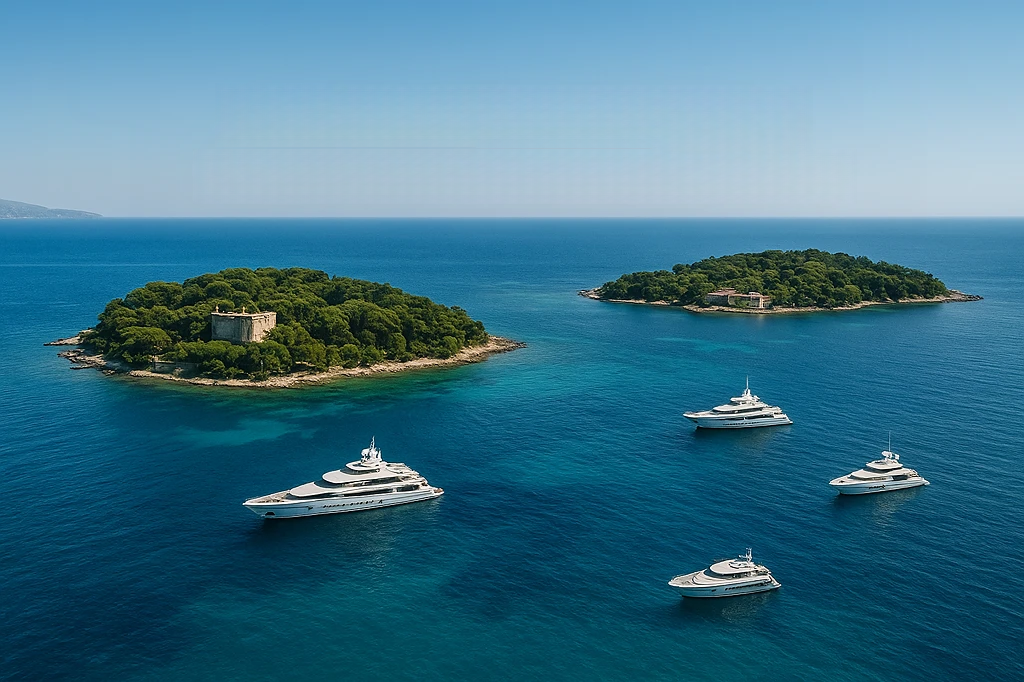
We all know the French Riviera. It’s the capital of summer: sparkling blue water, shining white yachts, and crowds large enough to make breathing a moment of struggle. The noise is always present—the thump of a beach club, the hum of traffic, the chit chats of a thousand tones all rolled into one busy season.
But what if we told you the true Côte d’Azur of Europe Trip Packages, the one that whispers instead of shouts, is only accessible when everyone else has packed up their flip-flops?
The real magic happens off-season. When the air turns crisp and the low Mediterranean light lengthens shadows, a different Riviera emerges. Not on the famous mainland, but just a quick ferry ride away, on the islands. These quiet havens, particularly the Îles d’Hyères (the Golden Islands) and the Îles de Lérins, shed their summer skin to reveal a landscape made for a peaceful France travel package.
Why Choose the Off-Season (Autumn/Winter)?
The French Riviera’s islands—notably the Îles d’Hyères (Golden Islands) and the Îles de Lérins—offer a different, highly valuable experience from October to April. The primary benefits are reduced crowds, lower accommodation costs, and an atmosphere suitable for hiking and relaxation.
- Atmosphere: The islands shed their busy, seasonal character, revealing their protected natural beauty. The climate remains relatively mild, allowing for comfortable outdoor activities.
- Access: Reduced ferry schedules mean fewer visitors, resulting in deserted coves and quiet trails.
- Vibe: The pace follows local life, the rhythms of the Cistercian monks, and the natural world, rather than mass tourism.
I. The Îles d’Hyères: Nature Reserves
The Golden Islands (off the coast of Hyères/Toulon) are famous for their biodiversity and car-free status, serving as havens for Mediterranean flora and fauna.
1. Porquerolles: Cycling and Coves
Porquerolles is the largest and most accessible island in the archipelago, famous for its Caribbean-like turquoise waters and extensive path network.
- Key Off-Season Activity: Cycling. The island features approximately 35 kilometers of paths accessible via bicycle or mountain bike. Bike rental remains available near the port, though check hours.
Major Attractions:
- Plage Notre-Dame: Considered one of Europe’s most beautiful beaches, it is serene and often empty off-season.
- Fort de Cap de Mèdes: Located on the eastern side, offering strategic views.
- Village Life: The Place d’Armes remains a center for local petanque games and community life under the giant eucalyptus trees.
- Logistics: The island is entirely car-free. Ferry service is available year-round, primarily from Hyères and Toulon. Limited accommodation, such as Villa Sainte Anne, operates through the winter; advance booking is essential.
2. Port-Cros: Hikes and Heritage
Port-Cros is a smaller, hillier island and holds the distinction of being a National Park (created in 1963). This status heavily restricts development and vehicle use.
- Key Off-Season Activity: Hiking. The island’s terrain is steep and rocky, necessitating sturdy footwear. Key trails include the path leading to the Vallon de la Solitude.
Unique Features:
- Strictly Car-Free: There is no bike hire or vehicular traffic, ensuring a truly quiet experience.
- Historical and Literary Connections: The island’s tranquility has long attracted artists and writers, including D.H. Lawrence and André Gide.
- Marine Reserve: The national park boundaries extend 600 meters out to sea, featuring an underwater nature path accessible to snorkelers (best enjoyed in early autumn).
- Logistics: Access is via ferry, primarily from La Tour Fondue (Hyères), Port Saint-Pierre (Hyères), and Le Lavandou. Consult the Maison du Parc National for trail information.
II. The Îles de Lérins: Spirituality and History
Located just off the coast of Cannes, these two islands are easily accessible for a day trip, offering a rapid transition from city glamour to centuries of history and prayer.
3. Île Sainte-Marguerite: Fort Royal and Forests
Sainte-Marguerite is the larger of the two Lérins Islands, characterized by extensive eucalyptus and pine forests.
- Historical Focus: Fort Royal. Built in 1624, the fort’s most famous resident was the mysterious prisoner known as the Man in the Iron Mask, who was held here for eleven years. The fort now houses the Musée de la Mer (Marine Archaeology Museum).
- Natural Features: The island features walking paths through fragrant forests and the Batéguier salt pond, a crucial wetland for birdwatching, hosting over 130 species of birds.
- Logistics: Regular ferry service from Cannes (approx. 15-20 minutes). The island is largely undeveloped outside the fort and ferry area, requiring visitors to navigate on foot.
4. Île Saint-Honorat: Monks and Viticulture
The smaller Saint-Honorat is renowned for its Cistercian monastery and continuous presence of monks dating back to 410 AD.
- Key Experience: Spiritual contemplation and viticulture. The twenty Cistercian monks maintain award-winning vineyards and produce highly regarded wines and liqueurs.
- Attractions: Visitors can view the medieval abbey tower and the 19th-century abbey complex. Wine tasting and sales are offered at the abbey shop, though hours are determined by the monks’ schedule (e.g., closures during mass).
- Logistics: Ferry service is available from Cannes. The island is accessible for public walks, but visitors must respect the monks’ enclosed private areas and the serene atmosphere. The only public restaurant, La Tonnelle, may operate on reduced winter hours.
Practical Off-Season Travel Guide
| Topic | Off-Season Reality (Oct–Apr) | Recommendation |
| Ferry Services | Reduced frequency compared to peak season. Routes may be limited by weather. | Always check return times immediately upon arrival. |
| Accommodation | Very limited, often confined to one or two establishments per island (e.g., Porquerolles). | Day trips are highly recommended. Book overnight stays months in advance. |
| Dining | Many restaurants, especially seasonal beach shacks, are closed. | Pack a picnic lunch, particularly for Port-Cros and Sainte-Marguerite. |
| Weather | Mild days (Indian Summer) but cold mornings/evenings. Mistral wind is common. | Dress in layers (jackets, scarves) and bring wind/water-resistant outerwear. |
| Cost | Generally, lower rates for transportation and mainland hotels; islands often have fixed seasonal pricing. | Take advantage of reduced daytime access rates often offered during winter months. |
Final Reflection
The true luxury of the French Riviera is not found in the size of the yacht or the depth of a designer handbag.
When the summer noise fades, these islands become giant breathing spaces.